

10 Apr What to Know About Your Options in Hair Restoration
Hair restoration involves medical and surgical approaches for hair loss. Patients seek treatment for thinning hair, and clinicians evaluate patterns of hair loss before selecting options. When individuals present with hair loss, providers assess scalp conditions, and they review clinical findings to guide planning. Scalp evaluation guides treatment planning. Clinicians assess hair density, and they review patterns of hair loss across the scalp. When hair loss progresses, providers document changes, and they evaluate treatment options based on clinical assessment. Medical history supports decision-making. Clinicians review relevant health factors, and they assess conditions that may relate to hair loss. When contributing factors are present, providers include them in the evaluation, and they use clinical information during treatment planning.
Using Surgical Hair Restoration
Surgical hair restoration moves hair follicles from donor areas to areas with thinning. Providers use follicular unit transplantation techniques, and they relocate grafts to targeted scalp regions. When donor hair is available, surgeons extract follicles, and they prepare grafts for placement according to treatment design.
Another surgical method uses individual follicle extraction. Follicular unit extraction removes follicles one at a time, and it avoids a linear donor scar. When surgeons perform this procedure, they harvest grafts, and they place them into thinning areas while maintaining donor site integrity.
Post-surgical care supports graft healing. Patients follow washing instructions, and they avoid disturbing the treated area during early recovery. When transplanted hair sheds after placement, providers monitor progress, and new growth develops later in the growth cycle.
Applying Medical Treatments
Topical medications support hair loss management. Minoxidil is commonly used, and patients apply it directly to the scalp. When patients use it consistently, providers monitor changes, and they evaluate visible maintenance of existing hair over time. Oral medications also support treatment of hair loss. These prescriptions target hormone-related pathways, and they reduce further follicle shrinkage. When patients continue treatment, providers track response, and they adjust care if changes or side effects occur.
Treatment response varies by individual. Clinicians monitor progress, and they adjust recommendations based on scalp response. When medication use continues long term, providers evaluate outcomes, and they reassess treatment during follow-up visits.
Reviewing Adjunct Therapies
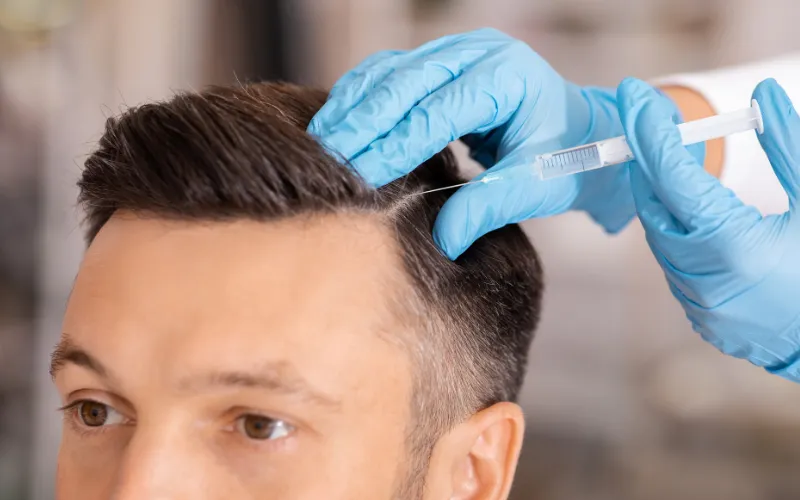
Platelet-rich plasma therapy supports hair restoration care. Providers collect a blood sample, and they process it to concentrate platelets for treatment use. When the prepared solution is injected into the scalp, it interacts with follicles, and providers monitor the response during treatment cycles.
Low-level light therapy is another adjunct option. Devices deliver light energy to the scalp, and this supports circulation in treated areas. When patients follow scheduled use, providers evaluate progress, and they adjust treatment plans based on observed response. Adjunct therapies vary in response. Clinicians combine options, and they tailor treatment plans to individual needs. When therapies are used together, providers track outcomes, and they refine care based on changes in hair density.
Find a Clinic
Hair restoration planning begins with a clinical consultation. Providers review treatment options, and they explain expected approaches for each method. When patients evaluate choices, clinicians assess suitability, and they match treatments to hair loss patterns. Follow-up care supports long-term monitoring. Providers schedule visits, and they track progress after treatment. Find a clinic in your area to get started.
Sorry, the comment form is closed at this time.