

29 May What to Expect During a Crown Procedure
A dental crown is a tooth-shaped cap that covers a damaged, decayed, weak, or worn tooth. Dentists use crowns to restore shape and function; they also use crowns to cover implants or teeth treated with root canal therapy. When a person needs a crown or bridge, the dentist evaluates the tooth, prepares the area, and uses impressions or scans to make a restoration that fits the mouth.
Definition and Uses
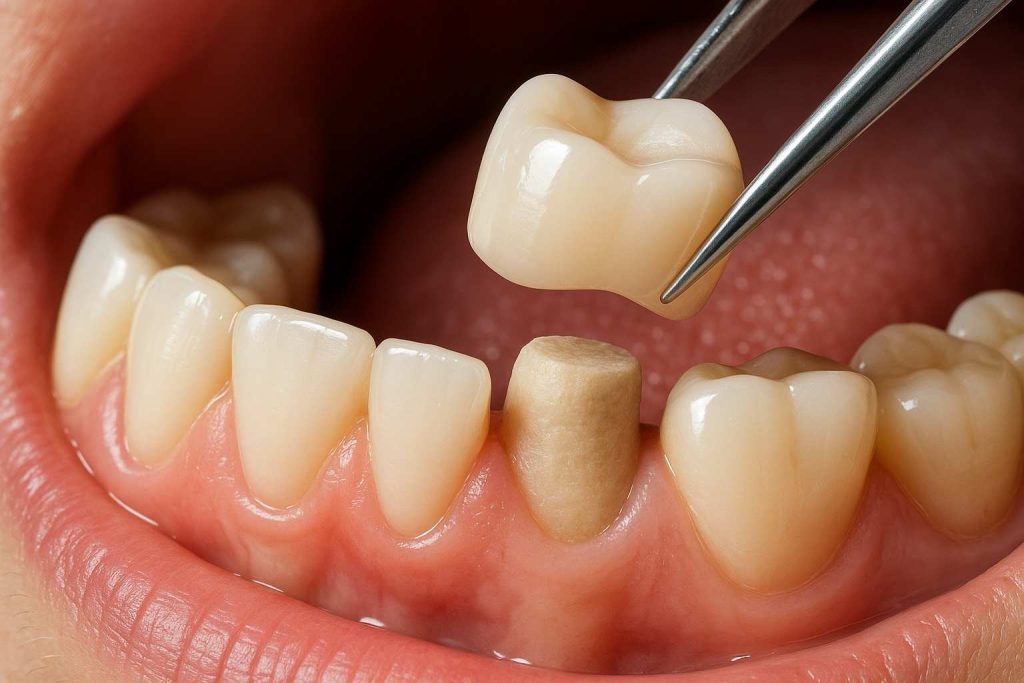
Crowns fit over the whole visible tooth above the gumline. The root stays in place; the dentist removes a small amount of enamel so the crown can sit and bond properly. Dentists may recommend a crown when a tooth is weak, cracked, worn down, broken, severely stained, or decayed, and they may also use one to hold a bridge, cover an implant, cover a large filling, or cap a tooth after root canal treatment.
Materials and Bridges
Crowns can use metal, resin, porcelain, ceramic, porcelain fused to metal, or zirconia. Because metal crowns resist chips and wear, dentists may use them for teeth that are less visible, but their color can stand out. Porcelain fused to metal combines strength with a tooth-colored surface, while the porcelain layer can chip and may wear away opposing enamel. All-ceramic and all-porcelain crowns can resemble natural enamel.
Zirconia is a ceramic material that is described as durable and able to withstand heavier forces than other ceramic crowns. Resin crowns cost less than other types, but they can break more easily and often serve as temporary crowns. A dental bridge fills a gap from one or more missing teeth. To support the bridge, the dentist places crowns on teeth beside the gap; those crowns hold a false tooth called a pontic. When the location and nearby teeth allow it, a bridge may bond on one side, use a composite wing, or rest on dental implants. Pontics may use gold, alloy, porcelain, or combined materials.
Crowns and Bridge Steps
A crown procedure usually takes two visits. At the first visit, the dentist examines the tooth and numbs the tooth and nearby gum tissue. The dentist files or reshapes the tooth; the dentist may add filling material when the tooth needs more support. After the tooth is prepared, the dentist takes a physical impression or digital scan and places a temporary crown while the lab makes the final crown. The lab often needs two to three weeks, and the schedule may take longer in some cases.
At the second visit, the dentist removes the temporary crown, checks the new crown for shape, color, and fit, and bonds it with dental cement. Some offices can make ceramic crowns in one visit with digital design and milling. Bridge treatment follows similar steps. During the first visit, the dentist shapes the abutment teeth beside the gap and takes an impression. When the bridge is ready, the dentist checks the fit and cements it in place.
Talk to a Specialist
After crown placement, many people return to work, school, or routine activities right away. Heat and cold sensitivity can occur for a few weeks, and gum soreness near the treated tooth may last a few days. If discomfort occurs, a person can use over-the-counter pain relievers, and the dentist can review symptoms that persist or worsen. Crowns can chip, crack, loosen, or trap bacteria if they do not fit well. A person may need dental evaluation for a loose crown, bad breath, a bad taste, cracks, chips, or sharp edges that bother the tongue or gums. Routine care includes brushing with fluoride toothpaste, flossing each day, using antibacterial mouthwash, and getting regular cleanings and exams. With proper care, many crowns last five to fifteen years, and some may last longer before replacement.
Sorry, the comment form is closed at this time.