

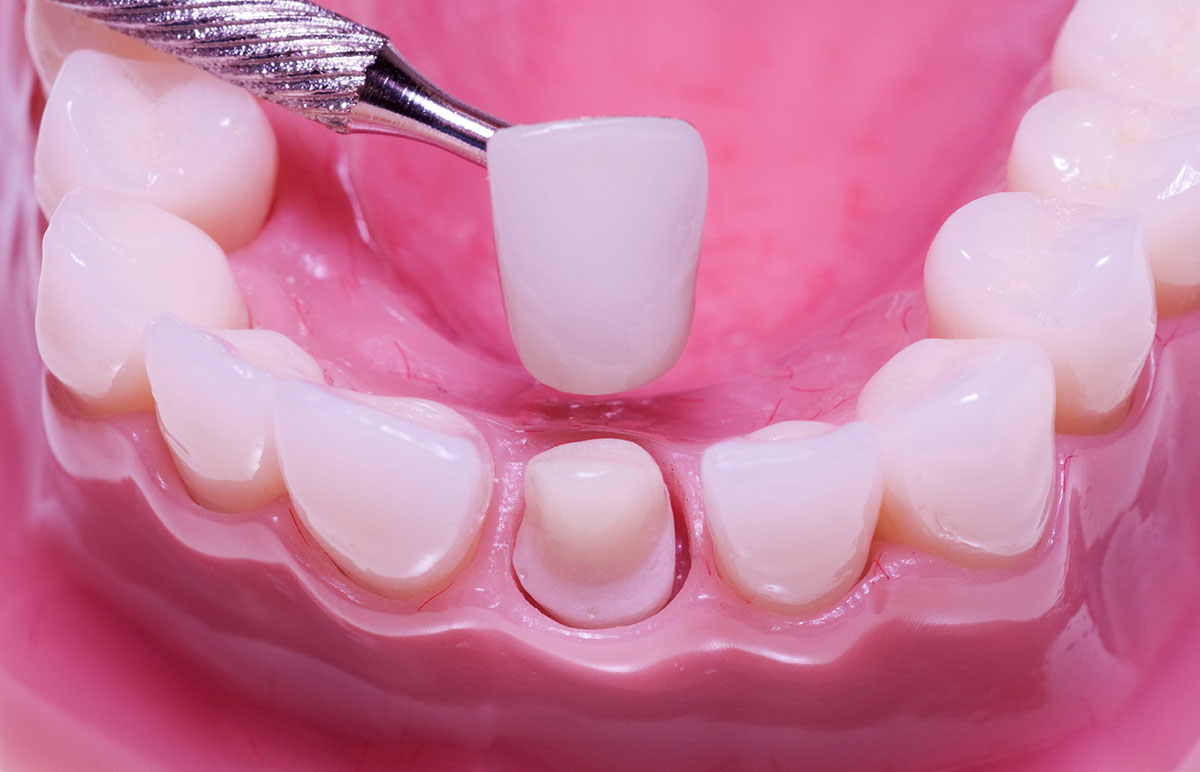
21 May What Is a Dental Crown?
Dental crowns are prosthetic caps for individual teeth. Dentists place these devices over damaged teeth, and the artificial structure covers the portion of the tooth above the gums. Because natural teeth sustain damage over a lifetime, a dental crown restores the original shape and dimensions of the tooth. The stability of the mouth requires adequate protection against everyday use forces.
What It Is
Dental laboratories create dental crowns from various materials, or manufacturers utilize a combination of durable substances to match tooth enamel. Although traditional porcelain is a frequent material choice for visible areas, specialized metal alloys provide advantages for force-bearing molars. Some dental crowns consist of zirconia or specialized composite resin materials. The creation process requires exact measurements of the patient’s mouth to achieve proper alignment.
While temporary crowns protect the tooth while the lab works, permanent crowns require a specialized dental cement for final placement. The permanent fixture acts as a replica of the original crown structure. Dental professionals take accurate impressions of the prepared tooth, and laboratory technicians use these molds to craft the final permanent restoration. The color matching process takes place in the clinical setting, but the actual manufacturing usually occurs at an off-site laboratory facility.
What It Treats
Dental crowns address a wide variety of structural deficits and mechanical weaknesses within a compromised tooth. If a patient undergoes a root canal procedure, the dentist places a crown over the remaining tooth structure to prevent subsequent fracturing. Severe decay ruins large portions of enamel, and fillings often leave the remaining tooth wall too weak to withstand eating. A cracked or structurally compromised molar requires this specific type of full-coverage artificial restoration to remain functional.
What to Expect
A crown placement procedure often requires two dental appointments, and patients typically wait two weeks between these visits. During the initial appointment, the attending dentist removes part of the outer enamel from the targeted tooth. Because the new artificial cap requires adequate space within the mouth, the practitioner shaves down the sides and the top. After the preparation phase concludes, the clinical staff creates an impression of the underlying tooth structure.
As the individual waits for the permanent device, a temporary acrylic crown covers the exposed dentin layer. The temporary cap lacks the strength of the manufactured product, so patients should avoid hard or sticky foods during this transitional period. The natural tooth structure remains protected against temperature fluctuations and common bacteria. A specialized temporary adhesive holds this interim device in its proper position.
The second clinical appointment involves the removal of the temporary acrylic cover from the patient’s mouth. The dental practitioner cleans the underlying tooth to remove all residual adhesive. Before the dentist applies the final permanent bonding agent, they check the fit and physical color match of the newly manufactured permanent cap. The practitioner applies a strong chemical cement to the interior of the fabricated crown, and they press the restoration onto the prepared tooth structure.
Learn More About Dental Crowns
If you have experienced dental trauma or require a crown, a dental office can offer treatment to help you return to normal activities. Crowns are a unique treatment method to preserve the use of structurally compromised teeth. Contact a dentist to schedule a consultation and receive treatment for compromised teeth.
Sorry, the comment form is closed at this time.