

21 May Understanding the Role of Foot Doctors in Treating Common Foot Conditions
A foot doctor diagnoses, treats, and manages conditions that affect the feet, ankles, and lower limbs. Common issues such as heel pain, bunions, ingrown toenails, flat feet, and diabetic foot concerns may require professional care to prevent discomfort from worsening. Here is a closer look at the role of foot doctors in treating common foot conditions:
Evaluating Foot Pain
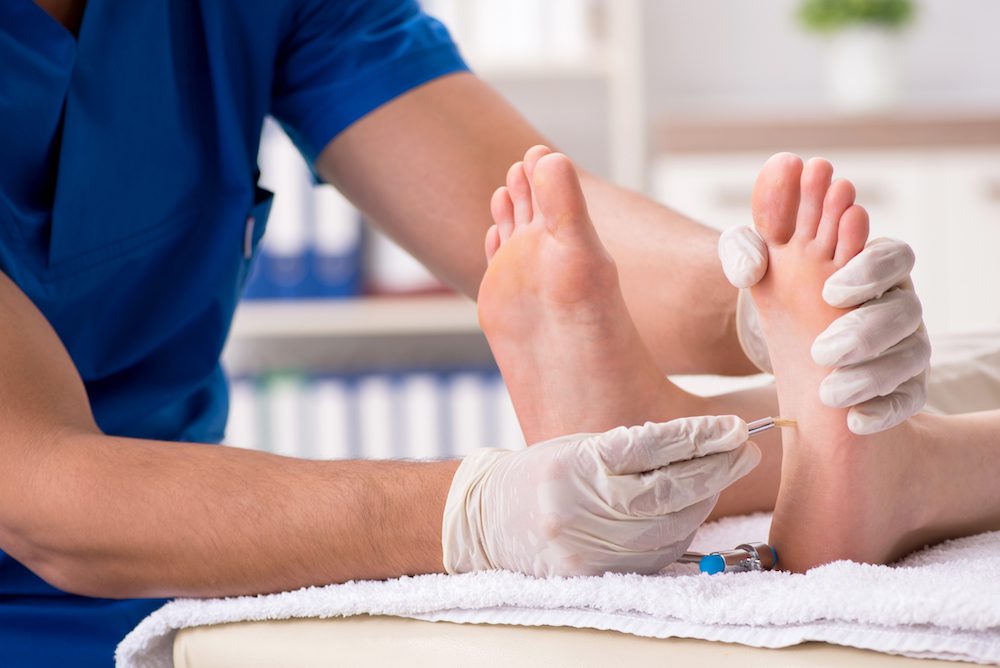
The initial evaluation phase establishes a clear understanding of the patient’s specific symptoms. A foot doctor generally reviews the complete medical history, and they examine the affected area to check for physical abnormalities. During this standard physical exam, the practitioner looks for localized swelling or restricted joint movement.
Diagnostic imaging plays a key role in the comprehensive clinical assessment process. Doctors frequently use X-rays to visualize internal bone structures, while ultrasound helps practitioners assess surrounding soft tissues. Advanced imaging reveals hidden stress fractures that a standard manual examination may miss.
Gait analysis is another fundamental tool in a comprehensive clinical evaluation. A doctor observes the patient walking across the examination room; this reveals biomechanical imbalances during active movement. This observational data helps the practitioner identify irregular pressure distribution patterns across the lower limbs.
Treating Common Conditions
A foot doctor routinely addresses various ailments that impact daily mobility. The following conditions are some of the frequent issues seen in modern clinical practice:
- Plantar fasciitis: This condition involves inflammation of the thick band of tissue along the bottom of the foot, causing sharp pain with initial movement.
- Bunions: These structural deformities develop at the base of the big toe, and they create hard bumps that complicate standard shoe fitting.
- Ingrown toenails: The edge of the nail grows into the surrounding soft skin, which often results in localized swelling and mild discomfort.
- Neuromas: Fibrous tissue thickens around a specific nerve leading to the toes, and this creates a physical sensation similar to standing on a small pebble.
Recognizing these common physical issues early allows patients to seek appropriate care before the symptoms worsen.
Exploring Treatment and Relief Options
Treatment plans vary widely based on the specific clinical diagnosis and the severity of the presented symptoms. A foot doctor often begins with conservative management techniques, and they adjust the approach if the initial methods prove ineffective. Custom orthotics provide external structural support that can alleviate direct pressure on sensitive joint areas.
Physical therapy is another fundamental component of standard recovery protocols. Guided clinical exercises strengthen the supporting muscles, which improves overall stability and promotes natural tissue repair. When conservative measures fail to produce objective results, practitioners may recommend surgical intervention. Surgical procedures aim to correct severe structural deformities, and they work to restore normal function to the affected area.
Preventing Long-Term Issues
Proactive habits play a key role in maintaining the basic health of the lower extremities. A foot doctor educates patients on daily routines that protect vulnerable bone structures. Here are key measures that can prevent issues:
- Proper footwear: Selecting supportive shoes with adequate arch structures minimizes daily mechanical strain on the lower limbs.
- Routine inspection: Checking the skin and nails regularly helps individuals identify early physical signs of external irritation.
- Hygiene practices: Thoroughly washing and drying the extremities prevents the accumulation of harmful environmental moisture.
- Activity modification: Alternating high-impact exercises with low-impact movements protects delicate joints from excessive wear.
Scheduling periodic clinical checkups allows the practitioner to monitor the objective effectiveness of these preventive routines.
Consult a Foot Doctor Today
Understanding the role of a foot doctor provides guidance on managing lower-limb ailments effectively. These professionals provide fundamental diagnostic services, and they develop structured management plans to address various structural issues. Their expertise proves highly helpful for individuals seeking to maintain an active lifestyle without physical discomfort. Contact a qualified foot doctor in your area to schedule your consultation today.
Sorry, the comment form is closed at this time.