

28 May Understanding the Causes and Symptoms of Varicose Veins
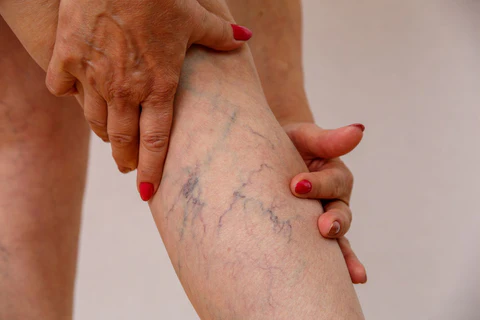
Varicose veins are enlarged, twisted veins that appear near the skin’s surface. They often develop in the legs and feet, where blood is required to move upward against gravity to return to the heart. Symptoms include aching, swelling, heaviness, or visible discoloration; tracking these signs can support medical evaluations. Here’s more information about this condition, including its causes and symptoms:
Defining Varicose Veins
Veins move blood back toward the heart after arteries carry blood to the body’s tissues. In the legs, muscles help push blood upward during movement. Small one-way valves inside the veins guide this flow, and they help limit backward movement.
When these valves do not close fully, blood may collect inside the vein. Added pressure sometimes stretches the vein wall and changes the vessel’s shape. The vein may look raised, curved, bulging, or rope-like beneath the skin.
Varicose veins differ from spider veins. Spider veins usually appear as thin red, blue, or purple lines. Varicose veins look larger; they are also more twisted and raised.
Explaining Valve Function
Valve function plays a fundamental role in leg circulation. The valves open as blood moves upward; then they close to help reduce backward flow. This process repeats throughout the day as you walk, stand, sit, and rest.
Gravity adds pressure to the veins in the lower body, especially during long periods of standing. Leg movement supports blood flow because muscle contractions help move blood through the veins. When movement stays limited for long stretches, the veins may receive less help from surrounding muscles. Age also influences vein structure. Over time, vein walls and valves may lose flexibility. This change does not mean every adult will develop a condition, but it helps explain why visible vein changes become more common with age.
Identifying Contributing Factors
Several factors contribute to varicose veins. Some relate to inherited traits, and others connect to body changes, work routines, or daily movement patterns. They include:
- Family history: Inherited traits may affect vein wall strength and valve structure.
- Age-related changes: Veins and valves have the potential to change over time.
- Pregnancy-related pressure: Body changes during pregnancy may increase pressure in leg veins.
- Standing periods: Standing for many hours places added pressure on lower-leg veins.
- Body weight: Extra physical load sometimes adds pressure to veins in the lower body.
Recognizing Common Signs
Varicose veins have a unique appearance; they may look blue, purple, or dark under the skin. Some form winding lines, while others appear as raised cords along the leg. People may also report physical signs in the same area. Common descriptions include leg heaviness, aching, throbbing, and tightness. Mild swelling near the ankles or dry skin over a visible vein may also be present.
Consult a Vascular Specialist
Varicose veins are enlarged surface veins linked with changes in blood flow and valve function. Gravity, age, family history, and hormones may all contribute to this condition. Common signs include raised or twisted veins with color changes; leg heaviness and swelling are also possible. If you notice new, changing, or persistent vein-related signs, consult a vascular specialist to understand your symptoms.
Sorry, the comment form is closed at this time.