

21 May Choosing the Right Size and Shape for Your Breast Augmentation
Breast augmentation modifies the dimensions of the chest through surgical insertion of medical-grade implants. Patients analyze sizing during planning sessions with a physician, and the doctor measures the natural breast dimensions of the patient. While some patients opt for more aesthetic modifications, others may prefer a natural look, and both can be achieved. A clinical evaluation of each patient informs the doctor in the final implant selection.
Profile
Since the implant profile alters the shape of the breast tissue, surgical specialists measure the natural tissue’s base to understand the starting point. Low-profile implant designs produce a broader base with less outward projection after a breast augmentation. This flatter structure fits wider chest cavities without stretching the skin, and it provides a more natural silhouette for patients with broader frames.
High-profile implants project further from the chest wall from a narrower base. While these lower bases often fit a narrowing rib, excessive forward projection can look less natural. Moderate profiles offer a structure between width and projection, so surgeons recommend these for maintaining natural proportions. Appropriate profile selection determines the final appearance and how natural the implants look with the patient’s body.
Volume
Implant volume correlates with the weight of the implant, so surgeons often calculate volume in relation to weight. Specific implant sizes can match standard apparel cup sizes. If a patient desires a certain breast size after surgery, the doctor evaluates skin elasticity around the chest to determine the safe volume capacity. This is balanced with how natural the outcome will look and the weight of the implants.
When the skin cannot fit the chosen implant volume, individuals can notice rippling or pulling around the breast. To prevent this issue, clinicians measure existing tissue size, and they match the implant with the determined boundaries of the breast. Conservative implants add volume while maintaining the natural shape of the chest. Because large implants stretch the tissue over time, moderate volume sizes preserve the look of the skin as individuals age.
Imaging technology assists the implant sizing process during preliminary evaluation appointments. Computer software can generate models of varying volumes, and physicians discuss with patients how different sizes will produce different results. While these models are helpful, the most helpful data is from the patient and their body.
Shape
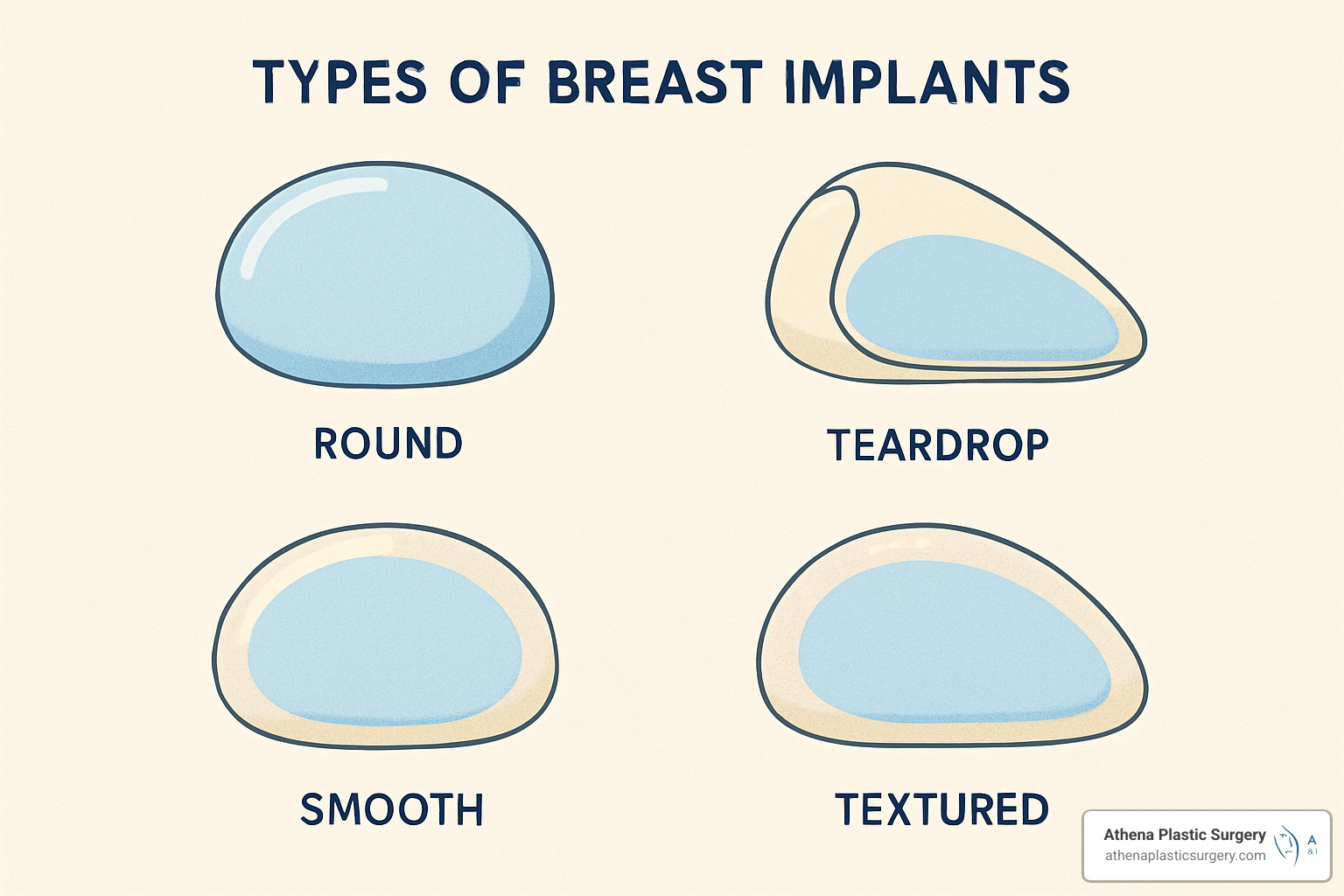
There are several shapes available for breast augmentation. Round implants often provide a more uniform fullness, but teardrop implants are similar to the natural shape of the breast. Since teardrop implants have more volume at the bottom, they match the shape of natural body contours. These implants often feature a textured surface to prevent rotation within the chest. Round models often do not have texturing because they do not require rotation prevention, so they can shift without altering the outward appearance.
The final shape of the breast depends on which style of implant the patient chooses. For a more natural look, individuals should inquire about teardrop implants. If the goal is more full volume, round implants may be the better option.
Schedule a Breast Augmentation Consultation
After a physician measures the size of the existing tissue, they can offer options for augmentation implants depending on the patient’s goals. Size, profile, and shape are details that can be discussed, and patients and doctors work to find the correct implant. Contact an aesthetics surgeon to schedule a consultation appointment for breast augmentation.
Sorry, the comment form is closed at this time.